
Feature
Rising cases of online violence against women journalists ahead of Kenya’s General Elections

When Lourdes Walusala, a senior producer at Kenya Broadcasting Corporation (KBC), lost her child due to a pregnancy-related complication nine years ago, her passion for advocating for maternal health was ignited.
While visiting a sick friend admitted at Kenyatta National Hospital (KNH) she met another patient who had just had corrective surgery after procuring a backstreet abortion that was unsuccessful.
Lourdes, who by then was in her third year of journalism practice, published an article on safe abortion which caught the attention of the public who in turn started harassing her for “championing for abortion”
“The article elicited mixed reactions and I really faced backlash from people who turned so abusive. I deleted their comments but they still followed me in my inbox and abused me for misleading women by encouraging them to procure abortions,” she narrated, adding that, “they reminded me of the child I had lost due to a pregnancy-related complication and that really hurt me.” she said in an exclusive interview with Parents magazine.
At this time, it dawned on her that online violence was real and that she was actually being harassed. She quickly deleted everything and contemplated leaving the media space.

Lourdes Walusala, a senior producer at Kenya Broadcasting Corporation (KBC) photo by Lourdes
Another journalist, Laura Otieno, who is currently a reporter at Citizen TV, equally faced online harassment from a source who had insisted on having his story published yet it did not meet the editorial threshold.
“I received a call from a colleague informing me that I was trending on Facebook. At first, I thought it was a story I had written that had gone viral, only to learn that I was being abused!” she exclaimed, adding that the abusers took screenshots of her various poses while in the field and posted them on social media.
“The captions said, be aware of this quack in the name of a journalist sleeping around and taking money from clients in exchange for publishing their stories. It was so traumatizing for me so I deactivated my account and I think it takes some days before it actually gets deactivated and during that time people were still sending all manner of messages in my inbox,” she recalls.
Laura decided to take a break from social media and when she decided to rejoin, she was still being trolled.
“I decided this is not worth it, I deleted that account in early 2020, and to date even when I sit in forums and we are told how important it is for journalists to embrace multimedia and use social media platforms, I do not have the courage yet to go back on Facebook,” she told Parents magazine, noting that she only uses Instagram and Twitter just to follow other people.
Effects of online harassment
Both Lourdes and Laura admit to having been traumatized by the online harassment forcing them to take breaks from social media as a way of self-sensor. The incidents also affected them emotionally and psychologically. The two have since learned that most of the time, online violence is not issue-based but is perpetuated around journalistic work to attack women.
According to them, online harassers look at something that will demean women, and most of the time the motive is to get them offline and silence them. They also reveal that online harassment comes in very different forms.
“Online is a very scary place to be in as a female journalist where you have to ignore certain aspects of things that are supposed to be part of your work just because you want to protect your mental space,” Laura said.
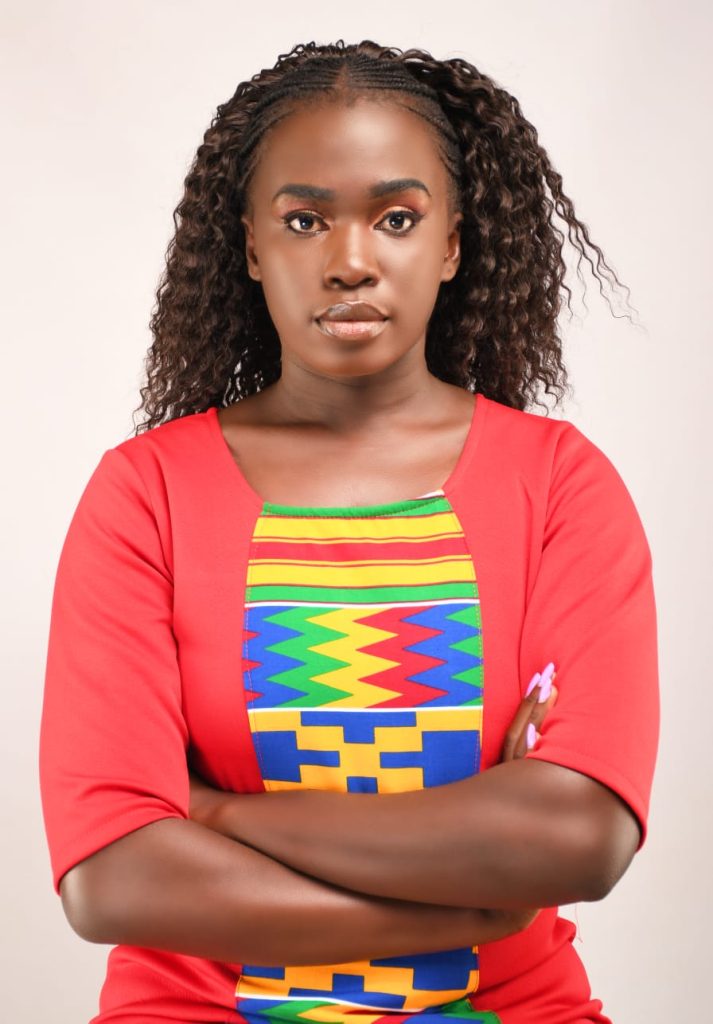
Laura Otieno, a journalist reporter at Citizen TV/Photo by Laura
Digital security training
Both Lourdes and Laura have undergone digital security training courses to help them manage their digital media accounts. They, however, admit that the skills cannot eliminate the comments that abusers wrote while harassing them and cannot plan and say that they will never be harassed again online. Nevertheless, they are glad that they are armed with information and skills that they can now use to report online harassers.
Lourdes describes the experience as baptism by fire that pushed her to develop an interest in digital training workshops. Since then, she has attended a digital security fellowship and other training opportunities where she has gained skills that help her stay safe online.
Mechanisms to reduce the online harassment
The Association of Media Women in Kenya (AMWIK)’s 2021 report on online violence against women journalists, shows that female journalists are harassed online much more than male counterparts in the same industry.
This is because statistically, the percentage of female journalists using social media is also lower compared to the male ones making them a minority group in the digital space. The report also pointed out that the bolder, louder, and more visible a woman journalist is, the more their probability of facing online-related violence.
According to AMWIK’s statistics, 53.7 per cent of female journalists rely on Facebook, 86.4 per cent on WhatsApp, 61.5 per cent on e-mail while 96.2 per cent rely on mobile voice for their day-to-day work. At the same time, 75 per cent of the journalists interviewed have experienced online harassment in the course of their work.
These cases are evidence of the rise of Technology-Assisted Violence Against Women (TAVAW). Some of the common forms named in the report include cyberbullying, trolling, cyberstalking, defamation/hate speech, online harassment, public shaming, identity theft, and hacking. These cases hinder female journalists from freely playing their watchdog roles because media practitioners rely heavily on the internet to source and share information.
With General Elections only days away, the cases are also increasing, posing a threat to female journalists. It is in this regard that different organizations including AMWIK and Siasa Place, a Non-Governmental Organization that aims to create an enabling environment for women and youth mainstreaming into body politics are now pushing for local authorities to create avenues to report such threats and be taken seriously.
The partnership, which is also between Google Africa and Twaweza Communication, is further working on ways to educate the public and to push for the government to do more to have better structures and laws to protect people online, especially from cyber-bullying and cyber harassment.
“We are pushing for a campaign, Heshimu Dada, basically respect women especially this political season because statistics show that women are harassed more.,” said Nerima Wako, Executive Director at Siasa Place.
According to statistics released by the telecommunication industry regulator, Communication Authority of Kenya in September 2017, the estimated number of data/internet users in the country was 51.1 million. The report further indicates that the number of mobile subscriptions stood at 41.0 million while at the same time, mobile penetration stood at 90.4 per cent.
Researchers say the development of the internet is contributing to an increase in online harassment among online users and therefore call for working framework regulations against it.
READ ALSO: The state of the two-thirds-gender rule ahead of the upcoming general election
In 2018, President Uhuru Kenyatta signed into law the Computer Misuse and Cyber-crimes Bill. Four years down the line, digital gurus say the computer misconduct misuse Act is still vague and punishes people who write while a lot of politicians use it to their advantage based on slander.
They say that when it comes to violence or threat to an ordinary person, the law has a very long way to go because it still doesn’t take these things seriously enough which calls for a lot of work that needs to be done.
“More and more young people are getting online and they are not being taught the etiquette of online engagement and also the fact that the structures that exist, basically that is the law, freedom of expression, the constitution, how we express ourselves, associate with who we can and who we want, have to transfer to online,” Nerima warned.
Different digital platforms have guidelines that individuals can use to reduce the harassment from reaching them directly. For example, Meta has options that individuals can use to report digital threats and harassment.
According to Nerima, it is unfortunate that more people are not reporting toxic content. She encourages that anyone abusing community guidelines be reported so that their accounts either get removed or blocked for a period while at the same time stopping this from happening to someone else.
Featured Image: CultureFeed
As the crescent moon appears in the night sky, marking the end of the ninth month of the Islamic lunar calendar, millions of people around the world transition from a period of deep reflection to one of vibrant celebration. Eid ul-Fitr, often called the “Festival of Breaking the Fast,” is one of the most significant dates in the calendar, representing a harmonious blend of spiritual accomplishment and communal joy.
Why is Eid al-Fitr celebrated?

Eid al-Fitr marks the conclusion of Ramadan, a month-long period where observers fast from dawn until sunset. The celebration is, at its core, a way to show gratitude. After thirty days of practising self-discipline, patience, and increased charity, the festival serves as a reward for the spiritual “marathon” completed during the holy month.
It is also a time to celebrate the revelation of the Quran, which is believed to have begun during the final ten days of Ramadan. By completing the fast, individuals celebrate the strength and willpower they gained, reinforcing their commitment to their values for the year ahead.
The importance of the day
Eid ul-Fitr is far more than just a day off from work or a festive meal; it serves several critical functions:
-
It acts as a bridge between the intense devotion of the previous month and a return to daily life, carrying forward the lessons of empathy and mindfulness.
-
The day begins with a special congregational prayer. This gathering brings together people from all walks of life, emphasising equality and unity within the community.
-
A key pillar of the holiday is Zakat al-Fitr, a mandatory charity given before Eid prayers. This ensures that everyone, regardless of their financial status, can enjoy a festive meal and join the celebration.
What does Eid al-Fitr mean?
While the literal translation is “the feast of breaking the fast,” the deeper meaning of Eid revolves around renewal.
-
Many view the day as an opportunity to start fresh. It is a traditional time for reconciling differences, forgiving past grievances, and strengthening bonds with family and neighbours.
-
After experiencing the hunger and thirst of a fast, the “Fitr” (breaking of the fast) takes on a profound meaning. It is a moment to appreciate the necessities of life (food, water, and health) that are often taken for granted.
- Beyond the religious context, it is a day defined by hospitality. Homes are opened, special sweets are shared, and children often receive gifts or Eid (money), creating a sense of wonder and belonging that lasts a lifetime.
Common traditions around the world
While customs vary by region, a few hallmarks remain constant:
-
Wearing new or best-quality clothes to honour the occasion.
-
In many cultures, the holiday is nicknamed the “Sweet Eid” due to the variety of desserts, like sheer khurma or baklava, served to guests.
-
The universal phrase used to wish others well is “Eid Mubarak,” which translates to “Have a blessed Eid.”
In essence, Eid al-Fitr is a beautiful reminder that discipline leads to joy, and that the greatest celebrations are those shared with others.
For more, click HERE to join our WhatsApp channel!
As the crescent moon appears in the night sky, marking the end of the ninth month of the Islamic lunar calendar, millions of people around the world transition from a period of deep reflection to one of vibrant celebration. Eid ul-Fitr, often called the “Festival of Breaking the Fast,” is one of the most significant dates in the calendar, representing a harmonious blend of spiritual accomplishment and communal joy.
Why is Eid al-Fitr celebrated?
Eid al-Fitr marks the conclusion of Ramadan, a month-long period where observers fast from dawn until sunset. The celebration is, at its core, a way to show gratitude. After thirty days of practising self-discipline, patience, and increased charity, the festival serves as a reward for the spiritual “marathon” completed during the holy month.
It is also a time to celebrate the revelation of the Quran, which is believed to have begun during the final ten days of Ramadan. By completing the fast, individuals celebrate the strength and willpower they gained, reinforcing their commitment to their values for the year ahead.
The importance of the day
Eid ul-Fitr is far more than just a day off from work or a festive meal; it serves several critical functions:
-
It acts as a bridge between the intense devotion of the previous month and a return to daily life, carrying forward the lessons of empathy and mindfulness.
-
The day begins with a special congregational prayer. This gathering brings together people from all walks of life, emphasising equality and unity within the community.
-
A key pillar of the holiday is Zakat al-Fitr, a mandatory charity given before Eid prayers. This ensures that everyone, regardless of their financial status, can enjoy a festive meal and join the celebration.
What does Eid al-Fitr mean?
While the literal translation is “the feast of breaking the fast,” the deeper meaning of Eid revolves around renewal.
-
Many view the day as an opportunity to start fresh. It is a traditional time for reconciling differences, forgiving past grievances, and strengthening bonds with family and neighbours.
-
After experiencing the hunger and thirst of a fast, the “Fitr” (breaking of the fast) takes on a profound meaning. It is a moment to appreciate the necessities of life (food, water, and health) that are often taken for granted.
- Beyond the religious context, it is a day defined by hospitality. Homes are opened, special sweets are shared, and children often receive gifts or Eid (money), creating a sense of wonder and belonging that lasts a lifetime.
Common traditions around the world
While customs vary by region, a few hallmarks remain constant:
-
Wearing new or best-quality clothes to honour the occasion.
-
In many cultures, the holiday is nicknamed the “Sweet Eid” due to the variety of desserts, like sheer khurma or baklava, served to guests.
-
The universal phrase used to wish others well is “Eid Mubarak,” which translates to “Have a blessed Eid.”
In essence, Eid al-Fitr is a beautiful reminder that discipline leads to joy, and that the greatest celebrations are those shared with others.
For more, click HERE to join our WhatsApp channel!

Hello world!
Teen, 17, Fatally Stabbed During Altercation with Friends in Eastleigh
Teen, 17, Fatally Stabbed During Altercation with Friends in Eastleigh
-

 Fashion9 years ago
These ’90s fashion trends are making a comeback in 2017
-
Entertainment9 years ago
The final 6 ‘Game of Thrones’ episodes might feel like a full season
-
Fashion9 years ago
According to Dior Couture, this taboo fashion accessory is back
-
Sports9 years ago
Phillies’ Aaron Altherr makes mind-boggling barehanded play
-
Entertainment9 years ago
The old and New Edition cast comes together to perform
-
Entertainment9 years ago
Disney’s live-action Aladdin finally finds its stars
-
Business9 years ago
Uber and Lyft are finally available in all of New York State
-
Sports9 years ago
Steph Curry finally got the contract he deserves from the Warriors