
Parenting
Helping young children shape their behaviour
Shaping children’s behaviour is a parenting role that should be taken seriously.

It’s the dream and joy of every parent to have children who are disciplined and achievers in life. Well-behaved children are associated with parents’ efforts in rearing, being role models and providing guidance and support. Through the socialization process, children develop certain types of behaviours as they interact with others within their environment. Friendly relationships and support from families fosters trust in children and lays a strong foundation to trust others, who they freely consult when faced with challenges in their daily life.
Disciplining children helps in developing acceptable behavioors through using different ways. Plans can be developed to encourage the acquisition of new skills incrementally as implementation progresses, and offer varied opportunities to practice learnt skills. Away from socialization, parents play an important role in shaping the behaviours of their children by showing interest in skills introduced and supporting the process.
Parents should provide a conducive environment and different opportunities with adequate resources and ensure the recommended process is followed. When children manifest acceptable behaviours, reinforcement should be done immediately to increase the likely hood of behaviour being repeated. Shaping behaviour can be done by using the following ways:
Develop a reinforcement or reward System
Any attempt and improvement toward desired behaviour should be followed by reinforcement to appreciate the efforts made. Use of praise or recognition immediately and being specific when expected behaviour is manifested, motivates children and teaches them the importance of behaving responsibly. To sustain motivation, a reinforcement or reward system can be established to provide a variety of reinforcements to build achievements progressively. It is important to emphasize training children to be motivated from within self (intrinsic) rather than from others (extrinsic).

Photo by coco tafoya on Unsplash
Use attention or ignoring techniques
Children are motivated when parents pay attention and show interest in what they do and have a tendency of checking if they are watching. Showing interest and paying attention when expected behavior is repeated should be immediately reinforced by using a smile, nodding your head or giving positive comments to encourage children to keep repeating until they master it. To ignore unacceptable behaviour when repeated should also be immediately acknowledged by pretending you have not seen it. This makes children realize it was not acceptable and adjusts to what the parent shows interest in.
SEE ALSO: What to do to understand your child better
Provide a rich and friendly environment
Parents have high expectations as children grow and should provide a rich and friendly environment to allow children to learn and exploit their full potential. A plan should be developed with guidelines on how behavioural concerns should be addressed. Parents are role models and influencers who are expected to provide opportunities for children to develop acceptable behaviours according to society. Children encounter challenges within the environment and may manifest behaviours that are not acceptable since they don’t know what to do or how to deal with the challenges. To be able to cope with these challenging situations they should be supported to acquire basic life skills.
Pre -Teaching
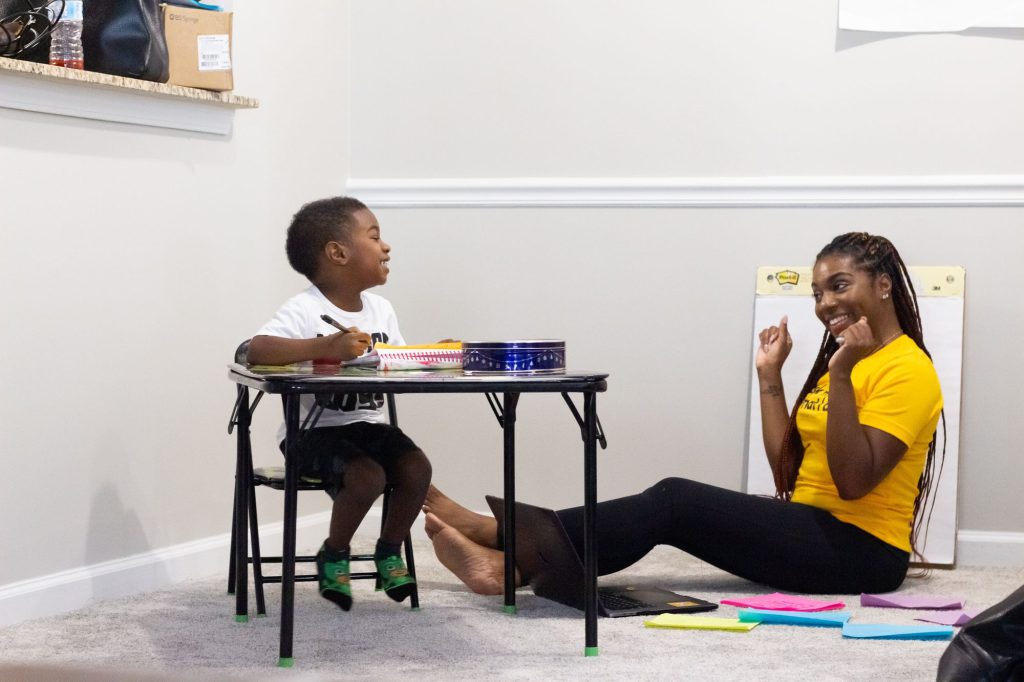
Acquisition of any skill requires total involvement and active participation in planned activities. Providing prior experience and exposure to a variety of pre-teaching activities should be emphasized to form a strong foundation for the future development of acceptable behaviours. Explanations of expectations of the behaviour and stipulated guidelines should be done before involving the child to understand the expectations and consequences of their behaviours.
Provide logical consequences
For children to understand what they are expected to do, discussions relating to consequences should be initiated to understand and avoid confusion on expectations of the required behaviour. Consequences for unexpected behaviour manifested should be provided and explained using logical consequences to enable children to understand and have ownership. This acts as a great tool to use for expected behaviour to be manifested and training children to be more responsible.
Conclusion
Shaping children’s behaviour is a parenting role that should be taken seriously. Daily interactions through the socialization process and rearing practices exposed to children early in life, affect children’s development of certain behaviours either positively or negatively which is reflected in adult life. Parents should facilitate the provision of a healthy environment with friendly relationships within families to foster positive growth and development of young children.
The article was written by Dr. Catherine Gichuba, CEO and Lead Consultant at Regional Social Consultants Agency (RESCA)
Grab an exciting and information packed Parents Magazine here
Parenting often revolves around setting boundaries and ensuring children follow rules. While discipline is essential, there is a hidden joy and power in saying “yes” to your child more often. Allowing controlled freedom can be a game-changer in fostering independence, confidence, and resilience in your child.
The Power of Yes
Saying “yes” doesn’t mean giving in to every whim or desire. Instead, it’s about choosing moments where your child can explore their world with freedom.
Whether it’s allowing them to choose their outfit for the day or letting them plan a family outing, these small moments of empowerment build self-esteem.
Building Confidence Through Freedom
 Children thrive when they feel trusted. By saying “yes” to reasonable requests, you’re telling your child that you believe in their ability to make decisions.
This trust translates into confidence as they learn to navigate their choices, understanding the consequences and rewards that come with them.
Creating Safe Boundaries
While saying “yes” is powerful, it’s crucial to establish safe boundaries. These boundaries ensure that your child’s freedom doesn’t lead to harm.
For example, you might say, “Yes, you can play outside, but stay where I can see you.” This approach allows freedom within a safe framework, giving your child the space to grow while keeping them protected.
Encouraging Problem-Solving Skills
When you allow your child to make decisions, you’re also teaching them to solve problems. They learn to think critically about their choices, weighing options, and considering outcomes. This skill is invaluable, as it prepares them for real-world challenges.
The Lasting Impact
The simple act of saying “yes” more often can have a profound impact on your child’s development. It’s a way to show trust, build confidence, and encourage independence.
So next time your child asks for something, consider the power of “yes.” It might just be the best answer you give all day.
For more, click HERE to join our WhatsApp channel!
Parenting often revolves around setting boundaries and ensuring children follow rules. While discipline is essential, there is a hidden joy and power in saying “yes” to your child more often. Allowing controlled freedom can be a game-changer in fostering independence, confidence, and resilience in your child.
The Power of Yes
Saying “yes” doesn’t mean giving in to every whim or desire. Instead, it’s about choosing moments where your child can explore their world with freedom.
Whether it’s allowing them to choose their outfit for the day or letting them plan a family outing, these small moments of empowerment build self-esteem.
Building Confidence Through Freedom
Children thrive when they feel trusted. By saying “yes” to reasonable requests, you’re telling your child that you believe in their ability to make decisions.
This trust translates into confidence as they learn to navigate their choices, understanding the consequences and rewards that come with them.
Creating Safe Boundaries
While saying “yes” is powerful, it’s crucial to establish safe boundaries. These boundaries ensure that your child’s freedom doesn’t lead to harm.
For example, you might say, “Yes, you can play outside, but stay where I can see you.” This approach allows freedom within a safe framework, giving your child the space to grow while keeping them protected.
Encouraging Problem-Solving Skills
When you allow your child to make decisions, you’re also teaching them to solve problems. They learn to think critically about their choices, weighing options, and considering outcomes. This skill is invaluable, as it prepares them for real-world challenges.
The Lasting Impact
The simple act of saying “yes” more often can have a profound impact on your child’s development. It’s a way to show trust, build confidence, and encourage independence.
So next time your child asks for something, consider the power of “yes.” It might just be the best answer you give all day.
For more, click HERE to join our WhatsApp channel!

Hello world!
Teen, 17, Fatally Stabbed During Altercation with Friends in Eastleigh
Teen, 17, Fatally Stabbed During Altercation with Friends in Eastleigh
-

 Fashion9 years ago
These ’90s fashion trends are making a comeback in 2017
-
Entertainment9 years ago
The final 6 ‘Game of Thrones’ episodes might feel like a full season
-
Fashion9 years ago
According to Dior Couture, this taboo fashion accessory is back
-
Entertainment9 years ago
The old and New Edition cast comes together to perform
-
Sports9 years ago
Phillies’ Aaron Altherr makes mind-boggling barehanded play
-
Business9 years ago
Uber and Lyft are finally available in all of New York State
-
Entertainment9 years ago
Disney’s live-action Aladdin finally finds its stars
-
Sports9 years ago
Steph Curry finally got the contract he deserves from the Warriors