
Feature
Janet Kavutha: Saving the giraffe species
As a wildlife researcher Janet’s work entails working to find out the challenges that giraffes across Africa face

Janet Kavutha, the programs officer at the Giraffe Conservation Foundation (GCF) describes herself as a wildlife researcher since her work entails working to find out the challenges that giraffes across Africa face. In the role, Janet employs science, inclusion of all stakeholders and conservation education to curb challenges such as disease, poaching, climate change and habitat loss that are threatening the existence of giraffes. Thanks to these efforts, Janet has created an enabling environment that has paved the way for the replenishment of the giraffe population which had been on the decline for some time. In her role as wildlife researcher she has had some exciting tasks. For instance, Janet has been part of the team that translocated giraffes from South Africa to Mozambique where none no longer existed.
Janet’s entry into wildlife research was rather peculiar. Firstly, efforts to get a job or internship in an institution relevant to the Integrated Forestry Resource Management degree she studied at Egerton were unsuccessful. When she landed an internship with Friends of Nairobi National Park (FoNNap) she was relieved. After her internship, the organization offered her a full-time job as the administration officer in 2020.
Her work at FoNNaP opened Janet to the challenges that both communities and Wildlife face due to poor conservation approaches. For instance, existing approaches did not fully address the human wildlife conflict. In May 2021, the Kenya Wildlife Service (KWS) invited her to take part in the national wildlife census. The census gave her access to veteran wildlife researchers and ushered her into the world of wildlife research. It also got her interested in the welfare of wildlife and she toyed with the idea of pursuing a career in the same. Her wishes came true after she was recommended for an opportunity as a wildlife researcher with Giraffe Conservation Foundation (GCF), mainly due to her conduct, enthusiasm and hard work during the census. She accepted the opportunity with both hands and vowed to find a way to bring peaceful co-existence between humans and wildlife.
READ ALSO: Serah Munguti: Taking environmental conservation a notch higher
As the programs officer at GCF, Janet leads the education program for children. She assists schools to develop proposals that allow them to secure grants from the organisations she works with. Once the schools win these grants, they utilise it to send their pupils to conservation areas where they learn more about giraffes and wildlife conservation.
“Witnessing these children separate from their ignorance on matters wildlife conservation is very fulfilling. I particularly enjoy seeing just how much they have absorbed after a session; they can literally narrate important facts about various species thereafter,” Janet says.
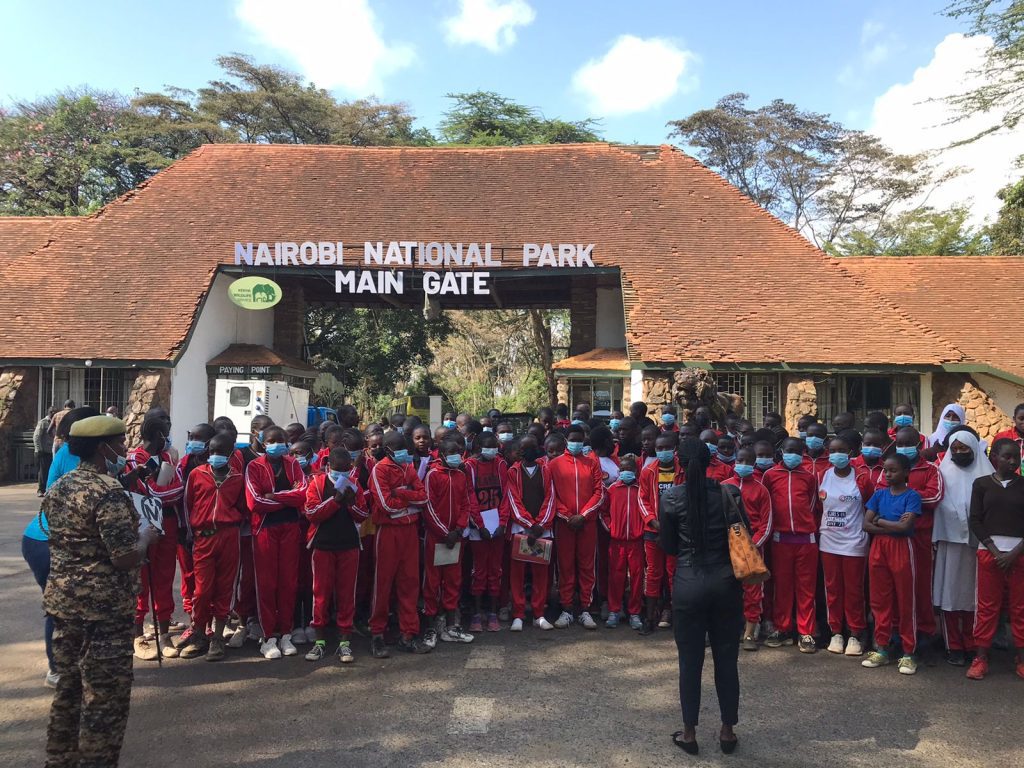
Janet with pupils at the Nairobi National Park during World Giraffe Day. Photo|| Courtesy.
Additionally, Janet works directly with the community rangers and scouts in wildlife data collection and monitoring. She has trained these groups that play an integral role in conservation at the south of Nairobi National Park.
She introduced these individuals who care for the giraffes in this area to technology that they can use to safeguard them. The technology helps to assess the health of giraffes and other threats that could otherwise be missed.
” I am glad that I took a short course in GIS and also interned in a company that taught me the importance of technology in conservation, this is how I have been able to do an exceptional job transferring such skill.” Janet explains.
Within the one year that the 29-year-old has worked with GCF, she has studied giraffes in Naivasha and established how many they are and the exact threats that these giraffes face. Her findings led her to establish more environmental clubs in schools in Naivasha so children can learn how they can also contribute to safeguarding the giraffes.
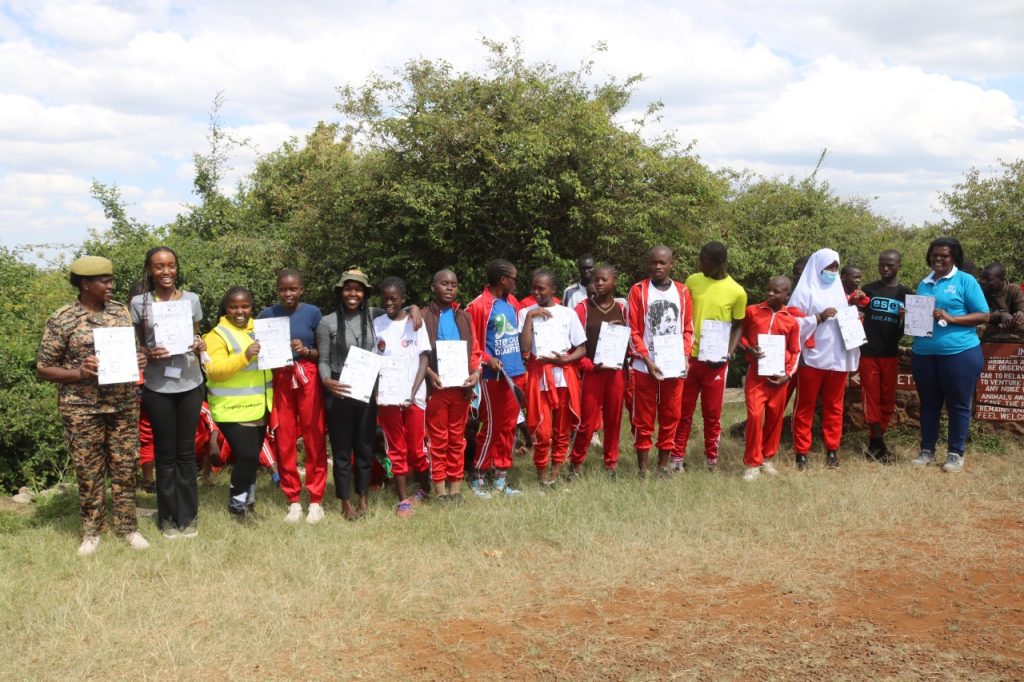
Janet with some of her trainees in a past training session. Photo||Courtesy
While her job sounds exciting, it has not been all roses for the mother of one especially because she works in a field that is dominated by men and expatriates. For example, she has heard demeaning remarks form her male counterparts as well as racist utterances from individuals who feel entitled to the conservation scene in Kenya.
“At first I felt a bit intimidated working with people and in this case men and wazungu who have been in the field for long, secondly who are more educated than me, so in most cases I would play small so as not to seem like I’m questioning,” Janet narrates.
However, thanks to the guidance received from her bosses, Janet has been able to rise above the intimidation by learning how to act and respond professionally to any intentions aimed at belittling her. The lessons enable her to work well, especially with seniors in government who demand professionalism at all levels of engagement.
Regardless of all the ups and down, Janet is not afraid of dreaming of big. She aspires to be a person who, through her work, can make an impact.
“I want to spark positive mindset about wildlife to kids, I want to resonate with communities and co create wildlife conservation solutions together and lastly lead research projects in the most ethical ways,” she reveals
Janet may not know it but her persistence and pursuit of her passion is inspiration to other upcoming conservationists. Not many people stay put when huddles come at them however, by watching and reading Janet’s story this norm is likely to change for the better.
Featured Image: Janet on a normal work day. Photo||Courtesy
Get an exciting issue of parent’s Magazine here
As the crescent moon appears in the night sky, marking the end of the ninth month of the Islamic lunar calendar, millions of people around the world transition from a period of deep reflection to one of vibrant celebration. Eid ul-Fitr, often called the “Festival of Breaking the Fast,” is one of the most significant dates in the calendar, representing a harmonious blend of spiritual accomplishment and communal joy.
Why is Eid al-Fitr celebrated?

Eid al-Fitr marks the conclusion of Ramadan, a month-long period where observers fast from dawn until sunset. The celebration is, at its core, a way to show gratitude. After thirty days of practising self-discipline, patience, and increased charity, the festival serves as a reward for the spiritual “marathon” completed during the holy month.
It is also a time to celebrate the revelation of the Quran, which is believed to have begun during the final ten days of Ramadan. By completing the fast, individuals celebrate the strength and willpower they gained, reinforcing their commitment to their values for the year ahead.
The importance of the day
Eid ul-Fitr is far more than just a day off from work or a festive meal; it serves several critical functions:
-
It acts as a bridge between the intense devotion of the previous month and a return to daily life, carrying forward the lessons of empathy and mindfulness.
-
The day begins with a special congregational prayer. This gathering brings together people from all walks of life, emphasising equality and unity within the community.
-
A key pillar of the holiday is Zakat al-Fitr, a mandatory charity given before Eid prayers. This ensures that everyone, regardless of their financial status, can enjoy a festive meal and join the celebration.
What does Eid al-Fitr mean?
While the literal translation is “the feast of breaking the fast,” the deeper meaning of Eid revolves around renewal.
-
Many view the day as an opportunity to start fresh. It is a traditional time for reconciling differences, forgiving past grievances, and strengthening bonds with family and neighbours.
-
After experiencing the hunger and thirst of a fast, the “Fitr” (breaking of the fast) takes on a profound meaning. It is a moment to appreciate the necessities of life (food, water, and health) that are often taken for granted.
- Beyond the religious context, it is a day defined by hospitality. Homes are opened, special sweets are shared, and children often receive gifts or Eid (money), creating a sense of wonder and belonging that lasts a lifetime.
Common traditions around the world
While customs vary by region, a few hallmarks remain constant:
-
Wearing new or best-quality clothes to honour the occasion.
-
In many cultures, the holiday is nicknamed the “Sweet Eid” due to the variety of desserts, like sheer khurma or baklava, served to guests.
-
The universal phrase used to wish others well is “Eid Mubarak,” which translates to “Have a blessed Eid.”
In essence, Eid al-Fitr is a beautiful reminder that discipline leads to joy, and that the greatest celebrations are those shared with others.
For more, click HERE to join our WhatsApp channel!
As the crescent moon appears in the night sky, marking the end of the ninth month of the Islamic lunar calendar, millions of people around the world transition from a period of deep reflection to one of vibrant celebration. Eid ul-Fitr, often called the “Festival of Breaking the Fast,” is one of the most significant dates in the calendar, representing a harmonious blend of spiritual accomplishment and communal joy.
Why is Eid al-Fitr celebrated?
Eid al-Fitr marks the conclusion of Ramadan, a month-long period where observers fast from dawn until sunset. The celebration is, at its core, a way to show gratitude. After thirty days of practising self-discipline, patience, and increased charity, the festival serves as a reward for the spiritual “marathon” completed during the holy month.
It is also a time to celebrate the revelation of the Quran, which is believed to have begun during the final ten days of Ramadan. By completing the fast, individuals celebrate the strength and willpower they gained, reinforcing their commitment to their values for the year ahead.
The importance of the day
Eid ul-Fitr is far more than just a day off from work or a festive meal; it serves several critical functions:
-
It acts as a bridge between the intense devotion of the previous month and a return to daily life, carrying forward the lessons of empathy and mindfulness.
-
The day begins with a special congregational prayer. This gathering brings together people from all walks of life, emphasising equality and unity within the community.
-
A key pillar of the holiday is Zakat al-Fitr, a mandatory charity given before Eid prayers. This ensures that everyone, regardless of their financial status, can enjoy a festive meal and join the celebration.
What does Eid al-Fitr mean?
While the literal translation is “the feast of breaking the fast,” the deeper meaning of Eid revolves around renewal.
-
Many view the day as an opportunity to start fresh. It is a traditional time for reconciling differences, forgiving past grievances, and strengthening bonds with family and neighbours.
-
After experiencing the hunger and thirst of a fast, the “Fitr” (breaking of the fast) takes on a profound meaning. It is a moment to appreciate the necessities of life (food, water, and health) that are often taken for granted.
- Beyond the religious context, it is a day defined by hospitality. Homes are opened, special sweets are shared, and children often receive gifts or Eid (money), creating a sense of wonder and belonging that lasts a lifetime.
Common traditions around the world
While customs vary by region, a few hallmarks remain constant:
-
Wearing new or best-quality clothes to honour the occasion.
-
In many cultures, the holiday is nicknamed the “Sweet Eid” due to the variety of desserts, like sheer khurma or baklava, served to guests.
-
The universal phrase used to wish others well is “Eid Mubarak,” which translates to “Have a blessed Eid.”
In essence, Eid al-Fitr is a beautiful reminder that discipline leads to joy, and that the greatest celebrations are those shared with others.
For more, click HERE to join our WhatsApp channel!

Hello world!
Teen, 17, Fatally Stabbed During Altercation with Friends in Eastleigh
Teen, 17, Fatally Stabbed During Altercation with Friends in Eastleigh
-

 Fashion9 years ago
These ’90s fashion trends are making a comeback in 2017
-
Entertainment9 years ago
The final 6 ‘Game of Thrones’ episodes might feel like a full season
-
Fashion9 years ago
According to Dior Couture, this taboo fashion accessory is back
-
Sports9 years ago
Phillies’ Aaron Altherr makes mind-boggling barehanded play
-
Entertainment9 years ago
The old and New Edition cast comes together to perform
-
Business9 years ago
Uber and Lyft are finally available in all of New York State
-
Entertainment9 years ago
Disney’s live-action Aladdin finally finds its stars
-
Sports9 years ago
Steph Curry finally got the contract he deserves from the Warriors